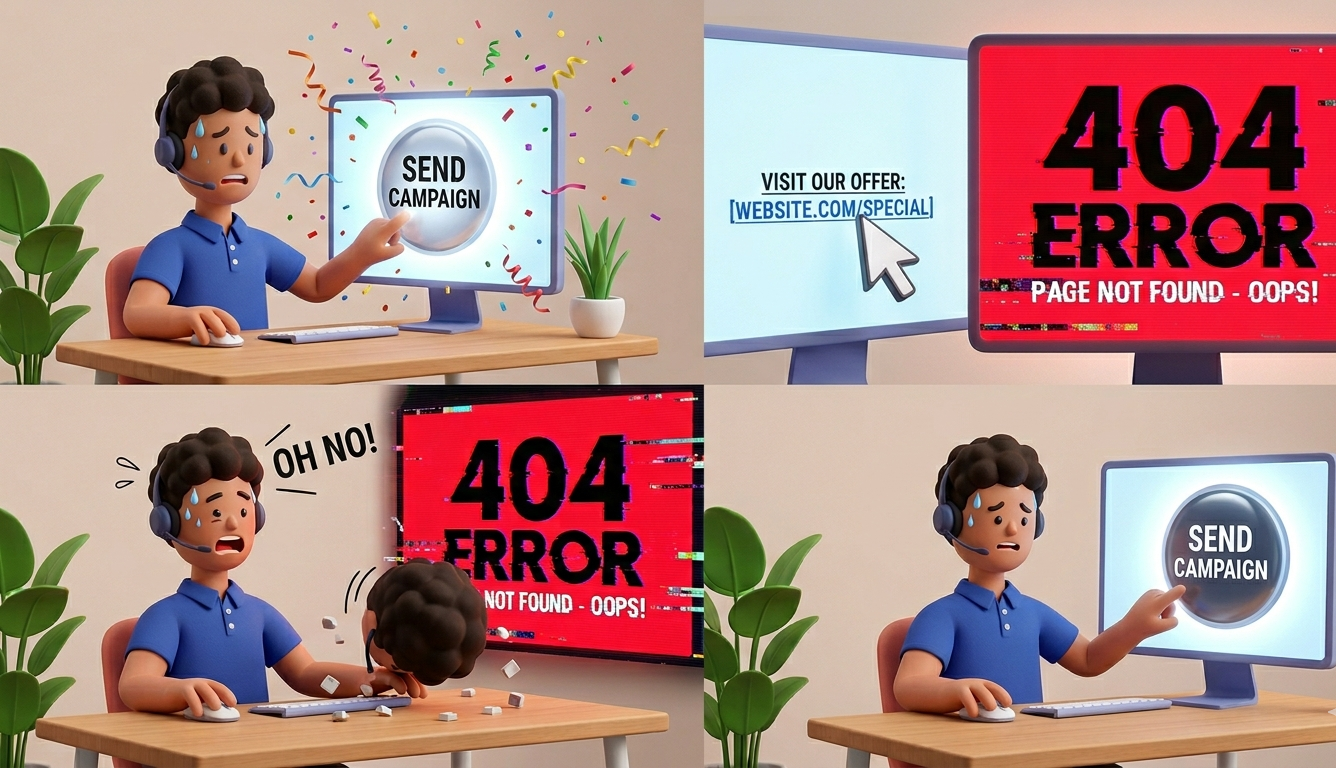
It’s 9:02 AM on a Monday. You’ve just hit "send" on a promotional email to 50,000 customers. You take a sip of coffee, ready to watch the conversions roll in, when you decide to click the link yourself just one last time.
404: Page Not Found.
The blood drains from your face. That "Order Now" button—the one you spent three days designing—leads to a digital dead end. In the old world of static links, this is where the story ends. Your campaign is a "zombie"—it’s out there, but it's dead on arrival. You can’t go back into 50,000 inboxes. You can't unprint the 10,000 business cards you handed out at yesterday’s trade show.
This is exactly why we built jmpy.me. We’ve seen too many "Link Graves," and honestly? It’s a waste of good marketing.
1. The Real Cost of a Broken Link (It’s Not Just the Sale)
When a customer clicks a link and hits an error, they don’t think, "Oh, they probably just had a typo." They think, "Is this company even legit?" Research suggests that about 88% of people won't come back to a site after a single bad experience. A broken link isn't just a missed transaction; it’s a withdrawal from your "Trust Bank." If you’re using basic, static shorteners, you’re essentially crossing your fingers and hoping nothing ever changes on your backend. That’s a risky way to run a business.
2. So, What Actually is a Dynamic Link?
Let’s skip the technical jargon for a second.
A Static Link is like a physical signpost nailed to a tree. If the road ahead closes, the sign is now lying to everyone who reads it.
A Dynamic Link is like a friendly concierge standing at the gate. If the destination changes, the concierge simply points the guest toward the new door.
With jmpy.me, the short link stays the same, but the destination is whatever you want it to be, whenever you want it to change. You aren't just creating a shortcut; you're maintaining a living connection.
3. "Oops" Protection: The Ultimate Safety Net
We’re all human. Developers rename subdirectories. Marketing teams change their minds about landing pages. Typos happen in the heat of a launch.
With a dynamic link, you have an "Undo" button for the real world. You log into your dashboard, swap the destination URL, and in under 10 seconds, the "broken" link is fixed. No panic, no frantic emails to support—just a quick pivot.
4. Stop Re-Printing Your Marketing Assets
Nothing feels more permanent than ink on paper. If you’ve ever printed a QR code on a batch of expensive brochures only to have the promotion end early, you know the pain of watching money go into the recycling bin.
A QR code should always be dynamic. By using jmpy.me for your physical assets, those flyers you printed today can point to:
Your Spring Sale is in April.
A Newsletter Signup in June.
Your Black Friday Promo in November. Same QR code, totally different outcomes.
5. Smarter Data (Without the Headache)
Many people worry that changing the destination of a link will result in the loss of their data. We built jmpy.me to solve that.
We track the Short Link itself, not just where it lands. This means you can see the entire "life story" of a link. You can see how that one link in your Instagram bio has performed over the last two years, even if you’ve pointed it to fifty different products in that time. It provides a holistic view of your audience's behavior that static links simply cannot match.
6. The "Kill Switch"
Let’s be real: the internet can be a mess. Sometimes, a site you’re linking to gets hacked, or a partnership goes south, and you need that link removed immediately. If that link is static, you’re just a spectator to your own PR nightmare. With a dynamic link, you actually have a "Panic Button." If things get weird or a site becomes unsafe, you can pull the plug or reroute that traffic instantly. It’s about keeping your customers safe and your brand out of the line of fire.
7. Seasonal Agility: One Link, Every Sale
Marketing can be exhausting. Every time a new holiday rolls around, teams usually scramble to update their social bios, website banners, and email footers with brand-new links.
With dynamic links, you stop the "link chase." You can use a single, professional-looking branded link like go.yourbrand.com/deals for everything.
In the Spring: It points to your new floral collection.
On Black Friday, You pivot it to your 50% off flash sale.
After the Sale: It routes back to your main shop automatically.
This keeps your brand identity clean. Your followers don't have to guess where to click, and your team doesn't have to waste hours updating "link-in-bio" tools every week.
8. Landing Page Optimization: Pivot for the Win
In the world of online sales, data is king—but only if you can act on it. Imagine you’re running a campaign and your analytics show that Landing Page B is converting 15% better than Landing Page A.
In a static world, you’re stuck with Page A until the campaign ends. But with jmpy.me, you can pivot in real-time. By swapping the destination link mid-campaign, you ensure that every single click from that moment on is directed to the page that actually makes you money. It’s like being able to change your storefront’s display while the customers are already walking through the door.
9. The "Clean Entry Point" Strategy (A/B Testing)
I’ve seen many businesses clutter their marketing with ugly, long tracking URLs just to test different strategies. It looks unprofessional and scares off savvy users.
Dynamic links allow you to maintain a Single Entry Point. You give your audience one clean, trustworthy URL. Behind the scenes, you can experiment with different backend destinations or strategies without ever changing the public-facing "face" of your brand. It’s professional on the outside, and agile on the inside.
10. The jmpy.me Edge: Why the "Good Stuff" is Just… Free
Let’s be real for a second: most platforms out there treat the "Edit" button like a luxury. They’ll let you shorten a link for free, but the moment you need to fix a typo or change a destination, they hit you with a $20-a-month paywall.
At jmpy.me, we think that’s backwards.
We’ve seen it happen too many times—a small business owner or a creator pours their heart into a launch, only for a single broken link to tank the whole thing. We don’t think you should have to pay $200+ a year just for "Oops Protection."
We built this platform with a simple belief: flexibility shouldn't be a premium feature. It should be the standard. We’ve kept our pro-level dynamic tools free because we want the "little guys"—the side-hustlers, the local shops, and the independent creators—to have the exact same digital safety net as the massive corporations.
We’re here to make sure your links stay alive, your assets stay evergreen, and you never feel held hostage by a static redirect again.
Share this insight
Help others grow
0 Shares